
How to Build a High-Converting Shopify Bundle Funnel: Step-by-Step 2026 Guide
Most Shopify stores build a bundle and skip the funnel. This guide covers product page, cart, checkout, and post-purchase so bundle adds become completed revenue.
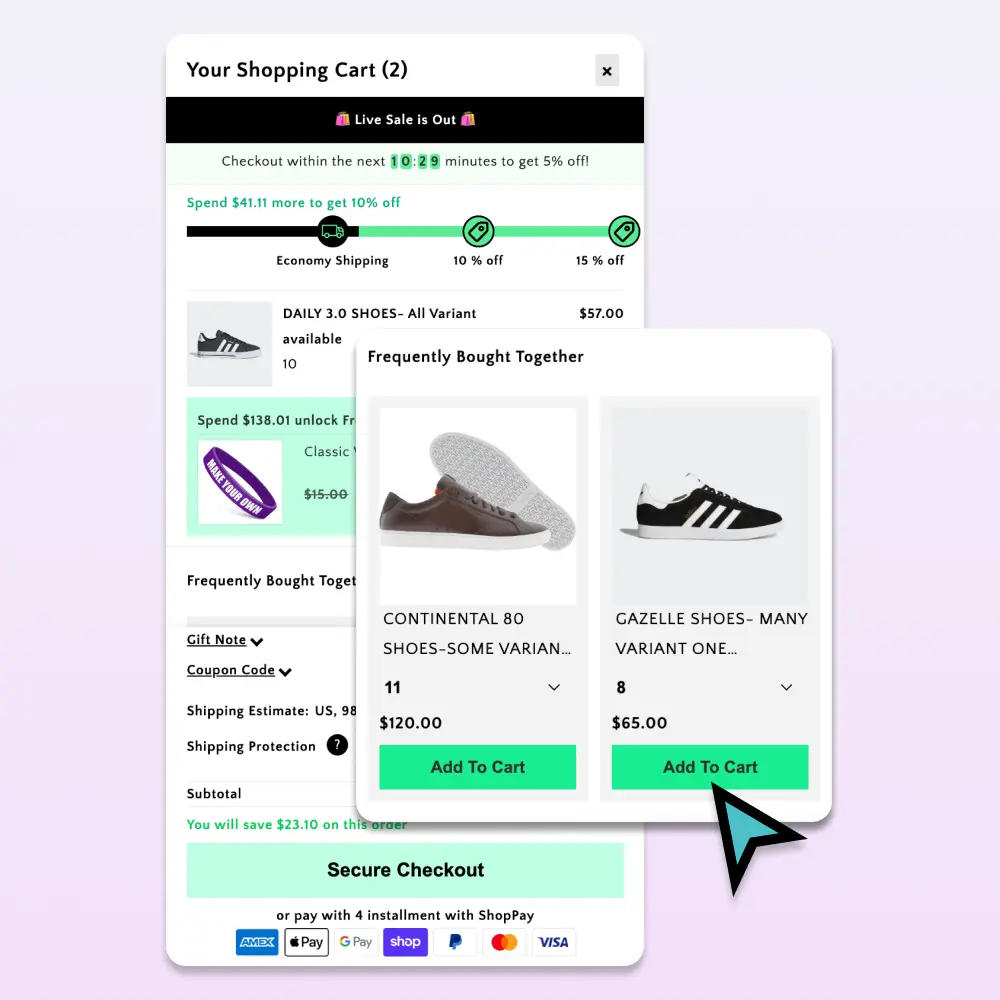
In this article
- 01 Why bundles increase AOV on Shopify (and when they do not)#
- 02 Fixed bundles vs. Mix and Match bundles: which to build first#
- 03 Cart optimization after the bundle is added#
- 04 Free shipping progress bars for bundle buyers#
- 05 Cart upsells on top of bundles#
- 06 Checkout trust signals for bundle buyers#
- 07 One-click post-purchase offers#
- 08 How to measure Shopify bundle funnel performance#
- 09 The complete Shopify bundle funnel#
- 10 Frequently Asked Questions#
Bundles are one of retail’s oldest revenue levers, but most Shopify stores implement them in a way that guarantees underperformance. They group products together, set a discount, put the widget on a product page, and then treat the bundle as finished. When revenue barely moves, they assume the bundle mechanic is the problem.
Almost always, the bundle is not the problem. The problem is that a bundle is not a product configuration. It is a customer journey. And most Shopify stores are only building the first 10 percent of that journey.
A high-converting Shopify bundle funnel runs from the moment a shopper sees the offer through the product page, into the cart, through checkout, and onto the thank-you page. Every handoff is an opportunity to either compound the value of the bundle or let it leak. This guide covers all of them.
Why bundles increase AOV on Shopify (and when they do not)
A Shopify bundle is a group of products sold together, typically at a discount below the combined individual price. The mechanism behind bundle AOV lifts is straightforward: you are persuading customers to buy more than they originally planned by making the combined purchase feel like a better deal than buying items separately. Done well, bundles lift average order value by 15 to 30 percent for the subset of shoppers who take the offer.
Three specific things cause bundles to underperform despite those numbers.
The wrong anchor product. Bundles work when items have obvious complements. A skincare cleanser pairs naturally with a toner. A yoga mat pairs naturally with yoga blocks. Products with many variants, highly personal selection criteria, or no clear complement relationship do not bundle well. Know which products in your catalog actually benefit from bundling before you configure anything.
A discount too shallow to feel meaningful. A 3 percent bundle discount does not feel like a deal. Shoppers need to feel they are genuinely winning something by adding the bundle. The effective threshold in most consumer categories is 10 to 15 percent off the combined price. Below that, attach rates are low. Above 20 percent, you are giving away margin on customers who would have bought both items separately anyway.
A funnel that breaks after the add. This is the most common bundle failure mode, and it is the one least examined. The shopper adds the bundle and then encounters friction, a surprise shipping fee, or a cart that does not clearly show their savings. They abandon. The bundle never converts into revenue.
That third failure mode is what the rest of this guide addresses.
Fixed bundles vs. Mix and Match bundles: which to build first
Before building the funnel, choose the right bundle type for your catalog. Getting this wrong wastes time on a mechanic that will never achieve meaningful attach rates in your category.
Fixed bundles are pre-curated product groups sold as a locked set. “Starter Kit includes Product A, Product B, and Product C.” They convert well when your catalog has natural kits, such as skincare routines, coffee brewing setups, or fitness starter packs. Shoppers who buy fixed bundles are buying the curation as much as the discount. They want someone to have made the decision for them.
Mix and Match bundles let shoppers assemble their own set: “Choose any 3 items from this collection and save 15%.” They work for consumables, apparel, and anything where personal preference drives the selection, such as flavors, colors, and sizes. Mix and Match typically achieves higher attach rates because every combination is valid and the shopper cannot make a wrong choice.
For a complete breakdown of Mix and Match setup and pricing, see our Mix and Match bundle guide.
Most stores benefit from running both types. Use fixed bundles for curated kits and Mix and Match for volume purchases. Start with one fixed bundle on your bestselling product before expanding to Mix and Match.
Cart optimization after the bundle is added
This is where most Shopify bundle funnels fall apart. A shopper sees the offer, clicks “Add bundle to cart,” and what happens next is almost completely unconsidered. If the cart experience is not optimized for bundle buyers, you will lose the conversion you just earned on the product page.
The cart has three non-negotiable jobs after a bundle add.
Show the savings clearly and immediately
When a bundle lands in the cart, the savings need to be visible within seconds. A line in the cart subtotal that reads “Bundle discount: $8.50 off” or “You are saving 12% on this order” keeps the purchase feeling like a deal. If the cart shows line items without any discount signal, shoppers second-guess the value they felt on the product page and the momentum breaks.
Never show contradictory item prices
A frequent anti-pattern: the bundle discount is applied as a percentage reduction at checkout, but the cart shows each item at its full retail price. The shopper does the math, sees numbers that do not match what they expected, and loses confidence. Make sure bundle discounts are reflected on individual line items or at minimum clearly summarized in the cart subtotal. The shopper should not have to do mental arithmetic to verify the deal is real.
Keep visual complexity low
A bundle adds two or three line items to what may have been a previously empty cart. If your cart drawer was designed for single-item orders, those three items create visual noise that signals complexity. Clean line-item presentation with consistent thumbnail sizes, clear product names, and logical visual hierarchy keeps the cart scannable and the decision to checkout feeling simple.
Free shipping progress bars for bundle buyers
After the bundle lands in the cart, the next goal is keeping the shopper moving toward checkout without creating new reasons to hesitate. A free shipping progress bar is the highest-leverage tool for this.
Set your free shipping threshold 10 to 15 percent above your average post-bundle cart value. If a shopper who adds your most popular bundle typically lands at $65, set the free shipping threshold at $72 to $75. The bar shows them they are $7 to $10 away from qualifying, which is close enough to feel achievable and worth adding one more small item to reach.
The psychology matters here. Free shipping progress bars convert because they transform a shipping cost from a loss the shopper wants to avoid into a goal they want to hit. Shoppers who reach the threshold feel like they won something, even if the extra item they added cost more than the shipping fee would have. Make sure the progress bar is visible the moment the bundle is added to the cart, not buried below the line items.
Cart upsells on top of bundles
Once the bundle is in the cart and the shopper can see their savings, there is a short window to suggest one more thing. Cart upsells on top of bundles must follow a single rule: complement, do not compete.
An upsell that suggests a product already in the bundle destroys trust. An upsell that suggests the logical next step, such as the add-on accessory, the refill, or the protective case, feels genuinely helpful.
For bundle funnels specifically, limit cart upsells to one or two items maximum. More creates a cross-sell gauntlet. Prioritize items priced under $20 if your bundles are in the $40 to $80 range. The ask should feel small relative to what is already in the cart. Use AI-driven recommendations rather than manual rules so the suggestion is personalized to the actual cart contents rather than a global frequency list.
The combination of a well-constructed bundle, a shipping progress bar, and one smart upsell regularly adds $8 to $15 to the average cart value in stores that have all three running together.
Checkout trust signals for bundle buyers
After the shopper clicks checkout, the cart funnel hands off to the checkout funnel. This is where many Shopify stores lose the sale entirely on bundle orders.
The core challenge at checkout for bundle buyers is value confirmation. The shopper already rationalized the bundle purchase on the product page, but standing at the payment screen with a total that is larger than they usually spend triggers a second wave of hesitation.
Show savings in the order summary. If the Shopify checkout page shows “Bundle discount: $12.00 off” alongside the order total, the shopper gets explicit confirmation that the deal is intact. If checkout only shows the final charge with no savings callout, anxiety creeps back in.
Add trust badges near the payment button. A secure checkout badge, a money-back guarantee mention, and a return policy summary positioned directly near the checkout CTA address the hesitation of customers who are emotionally ready to buy but cognitively second-guessing. CartyLabs lets you inject all three into Shopify checkout without any code changes.
Include one social proof element. A star rating or a short snippet like “4,800 five-star reviews” near the order summary keeps the positive emotional state active through the payment step. It reminds the shopper that other people made this same decision and were satisfied.
One-click post-purchase offers
After the checkout confirmation fires, there is one more revenue opportunity that costs almost nothing to capture. The post-purchase upsell.
Three things make this moment uniquely favorable for conversion. The customer’s payment method is already on file. Shipping is already committed, so adding one more item does not create a new fulfillment event. And the customer’s emotional state is at peak satisfaction immediately after completing a purchase they felt good about.
A well-timed post-purchase upsell converts 5 to 12 percent of buyers and adds revenue at 80 to 90 percent margin because fulfillment is already happening. For bundle buyers specifically, the strongest post-purchase offers are the consumable refill for an item in the bundle, a size or variant upgrade they did not choose, or a subscribe-and-save option on a product they are clearly going to use repeatedly.
Avoid showing another bundle as a post-purchase offer. A shopper who just bought a bundle does not need to see another bundle. They need to see the obvious next step.
How to measure Shopify bundle funnel performance
Bundle funnels require three specific metrics tracked independently from overall store performance. Tracking these separately is what reveals where the funnel is working and where it is leaking.
Bundle attach rate measures what percentage of sessions that land on a page with a bundle offer actually add the bundle. A healthy attach rate is 8 to 18 percent depending on the category and the placement visibility. Below 5 percent usually means the discount is too shallow, the anchor product is wrong, or the widget is not visible above the fold.
Bundle cart abandonment rate compares the percentage of sessions with a bundle in the cart that do not complete checkout against your store-wide cart abandonment rate. If bundle sessions abandon at a higher rate than non-bundle sessions, the cart or checkout experience is specifically breaking for complex orders.
Bundle AOV lift compares average order value for orders containing a bundle against orders without one. This lift should typically be 20 to 40 percent. A small or negligible lift suggests the bundle may be substituting for items shoppers would have purchased individually rather than adding net-new spend.
Track all three on a rolling 30-day basis. Bundle AOV lift is the north star. Bundle attach rate and cart abandonment rate are the diagnostics that explain why the north star is moving in the direction it is.
The complete Shopify bundle funnel
A high-converting bundle funnel looks like this from start to finish.
- Product page: Bundle offer visible above the fold below the main add-to-cart button, with discount clearly stated in dollar and percentage terms
- Add to cart: Cart opens with savings immediately visible, free shipping progress bar active, one complementary upsell surfaced
- Cart drawer: Clean line-item display, discount confirmed in subtotal, free shipping threshold visible
- Checkout: Savings confirmed in order summary, trust signals near the payment button, minimal form friction
- Post-purchase: One relevant follow-on offer with a one-click add, not another bundle
Every step confirms the value the customer felt at step one. Every step makes the next step feel natural and easy. No step introduces new friction, new doubt, or contradictory information about what the customer is paying.
Most Shopify stores have step one and nothing else. The funnel from step two forward is where the revenue lives.
Frequently Asked Questions
What is a Shopify bundle funnel?
A Shopify bundle funnel is the complete customer journey from first seeing a bundle offer to completing the purchase. It includes the product page offer, the cart experience after the bundle is added, the checkout page, and the post-purchase thank-you page. Most Shopify stores only build the product page offer and neglect the cart and checkout stages, which is where the majority of bundle abandonment happens.
What discount percentage works best for Shopify bundles?
The most effective bundle discount range on Shopify is 10 to 18 percent off the combined item price. Below 10 percent, the discount does not feel meaningful and attach rates stay low. Above 20 percent, you erode margin on buyers who would have purchased both items at full price anyway. For higher-ticket categories like skincare and supplements, consider anchoring on dollar savings (“Save $45”) rather than percentage savings when the dollar number is more impressive.
How do I track bundle performance on Shopify?
Track three metrics: bundle attach rate (target 8 to 18 percent of sessions that see the offer), bundle cart abandonment rate (compare against non-bundle session abandonment to isolate cart issues), and bundle AOV lift (bundle orders should be 20 to 40 percent higher than non-bundle orders). Review on a rolling 30-day basis. Revenue per visitor is the true north-star metric that shows whether the bundle program is growing the business or just shifting spend.
How do I set up a bundle on Shopify?
Shopify’s native Bundles feature in the admin supports basic fixed bundles as a single product variant. For Mix and Match bundles, tiered discounts, explicit cart-level discount display, and post-purchase follow-ups, a dedicated app is needed. CartyLabs handles bundle creation, cart optimization, and checkout trust signals in one tool without requiring custom development.
Keep reading
All articles →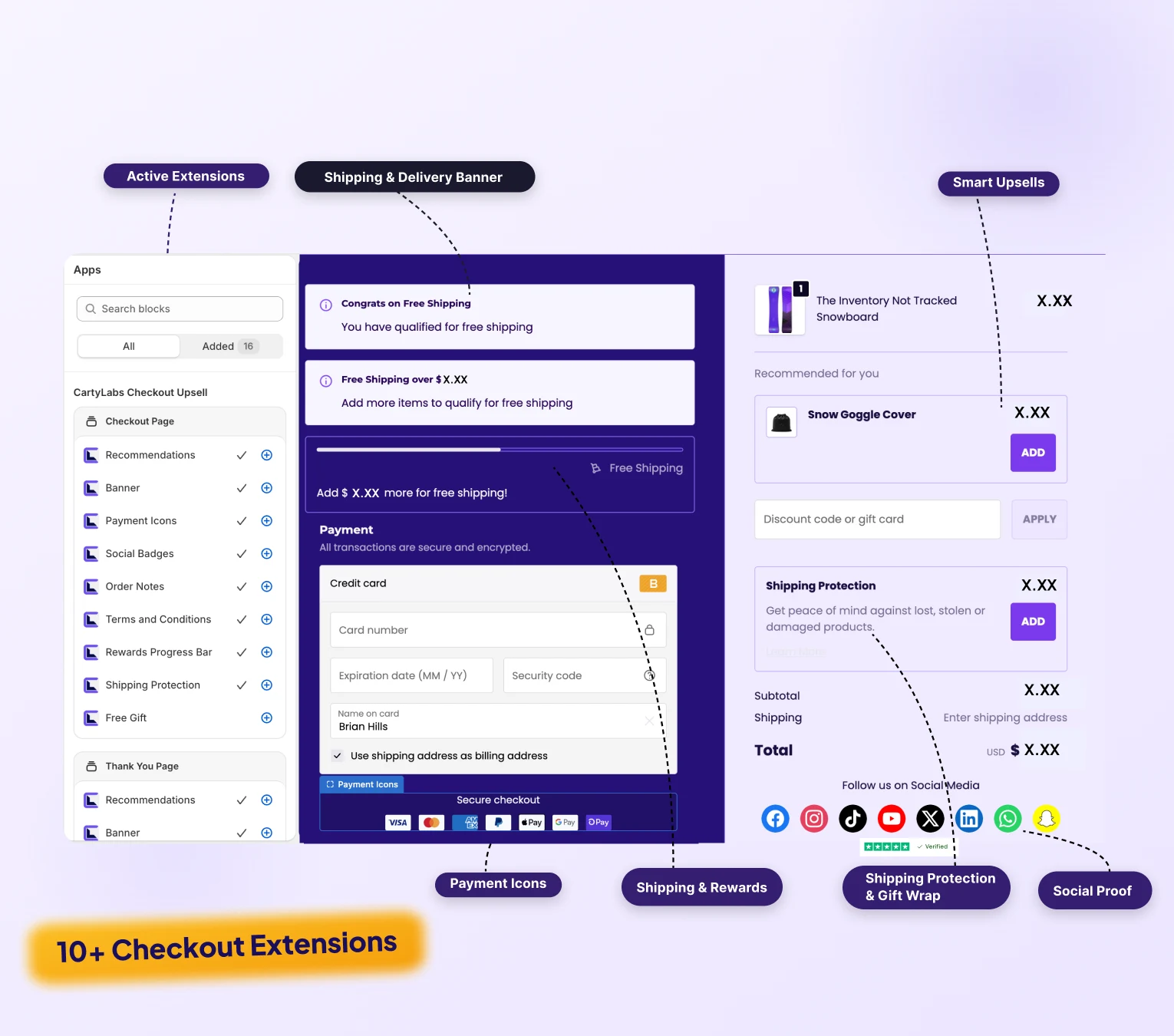
Why Your Shopify Bundles Aren't Generating More Revenue (And How to Fix the Cart Funnel)
Shopify bundles fail after the add to cart more often than on the product page. Learn to diagnose and fix the five friction points that break bundle conversion.
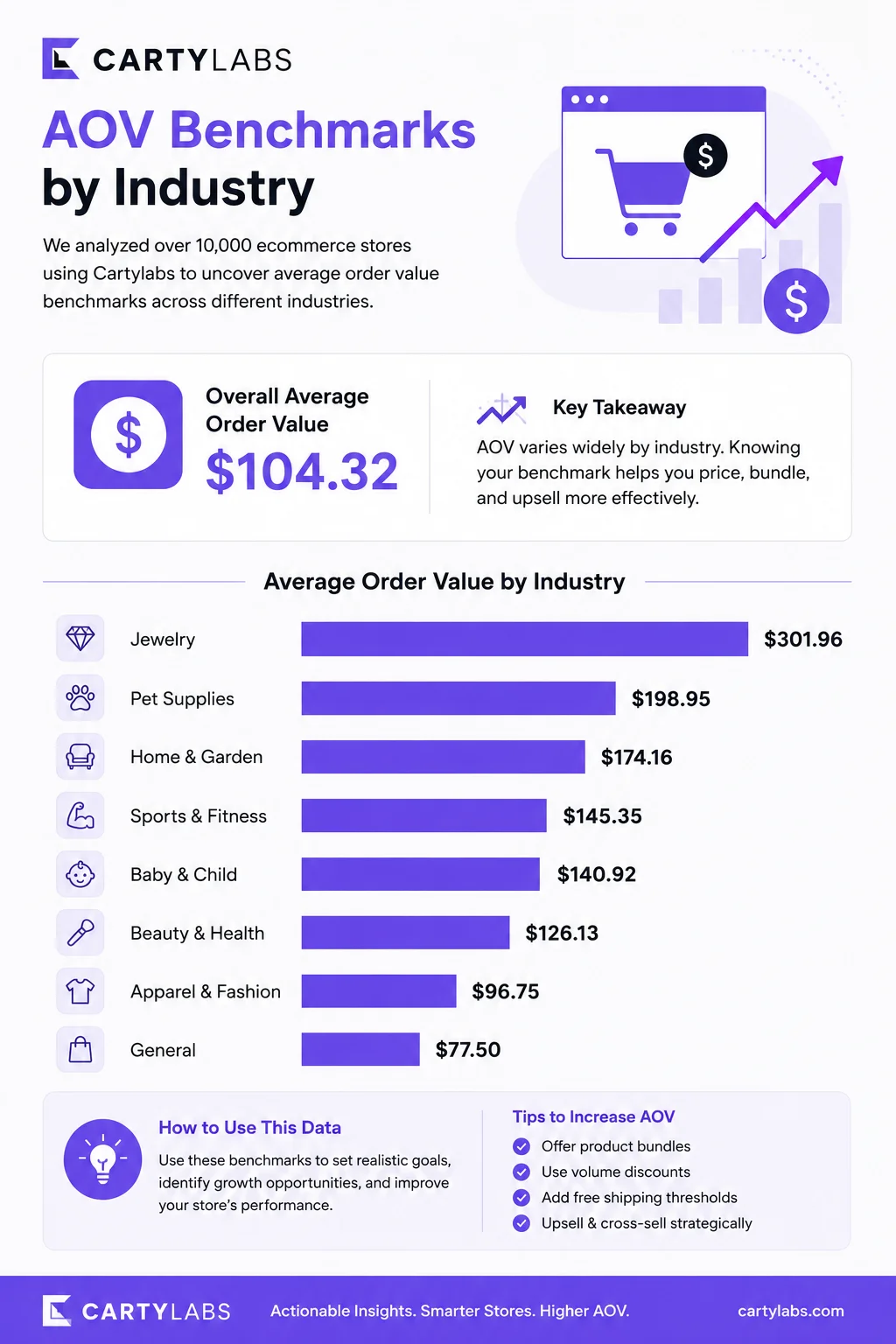
AOV Benchmarks by Industry 2026: What's a Good Average Order Value?
Average order value benchmarks across 15 Shopify verticals in 2026. Apparel, beauty, home, supplements, food and beverage, electronics, and more. Median, top 25%, and top 10% by category.
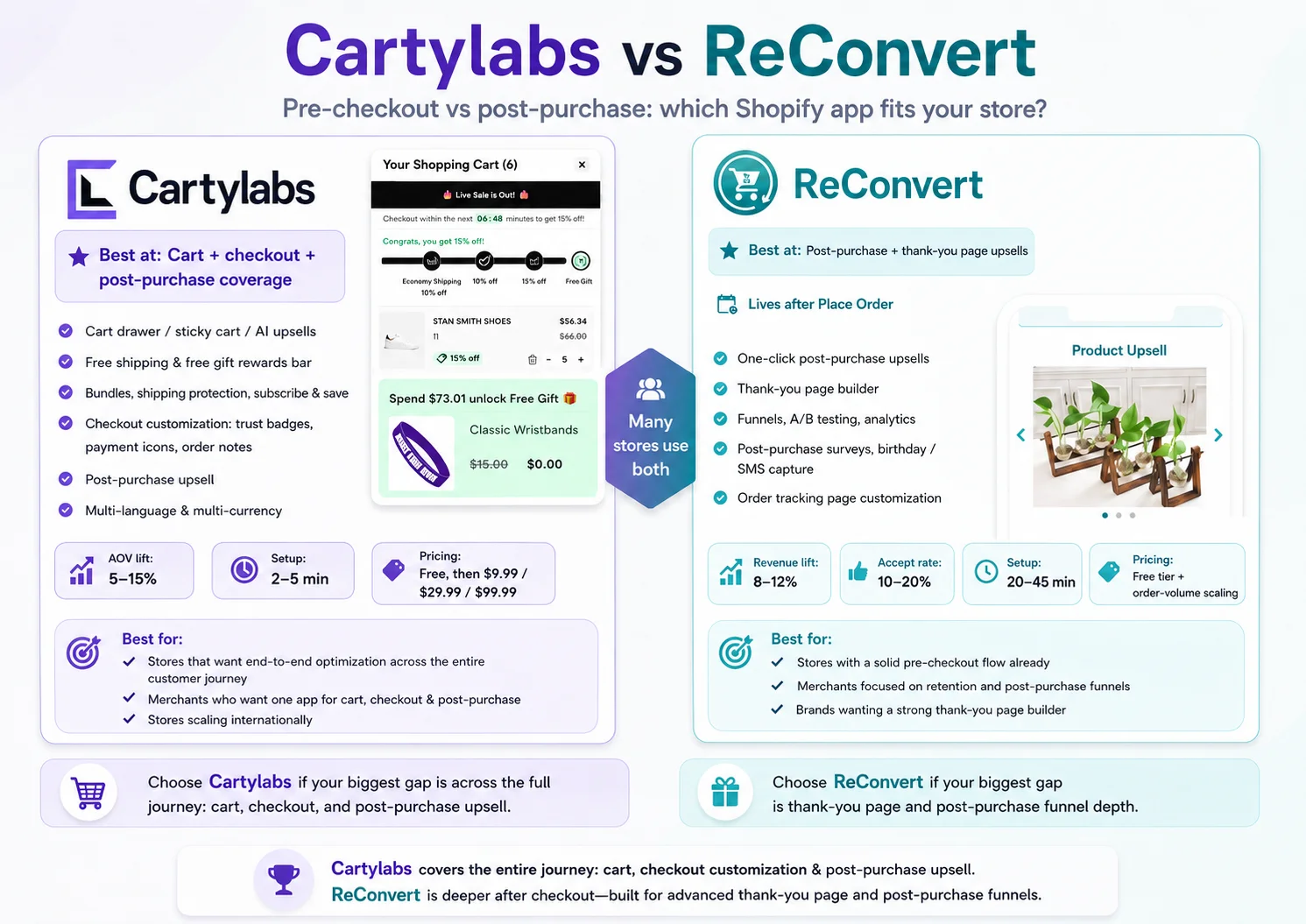
Cartylabs vs ReConvert: How the Two Compare Across Shopify Checkout Surfaces
Cartylabs vs ReConvert compared head-to-head. What each one does, where they overlap, pricing, setup, and which store profiles each one fits in 2026.
 Install Free Checkout App