
Shopify Customer Retention: How to Drive Repeat Purchases
Acquisition gets you the first sale, retention builds the business. Learn how to increase LTV through subscriptions, loyalty programs, and post-purchase flows.
In this article
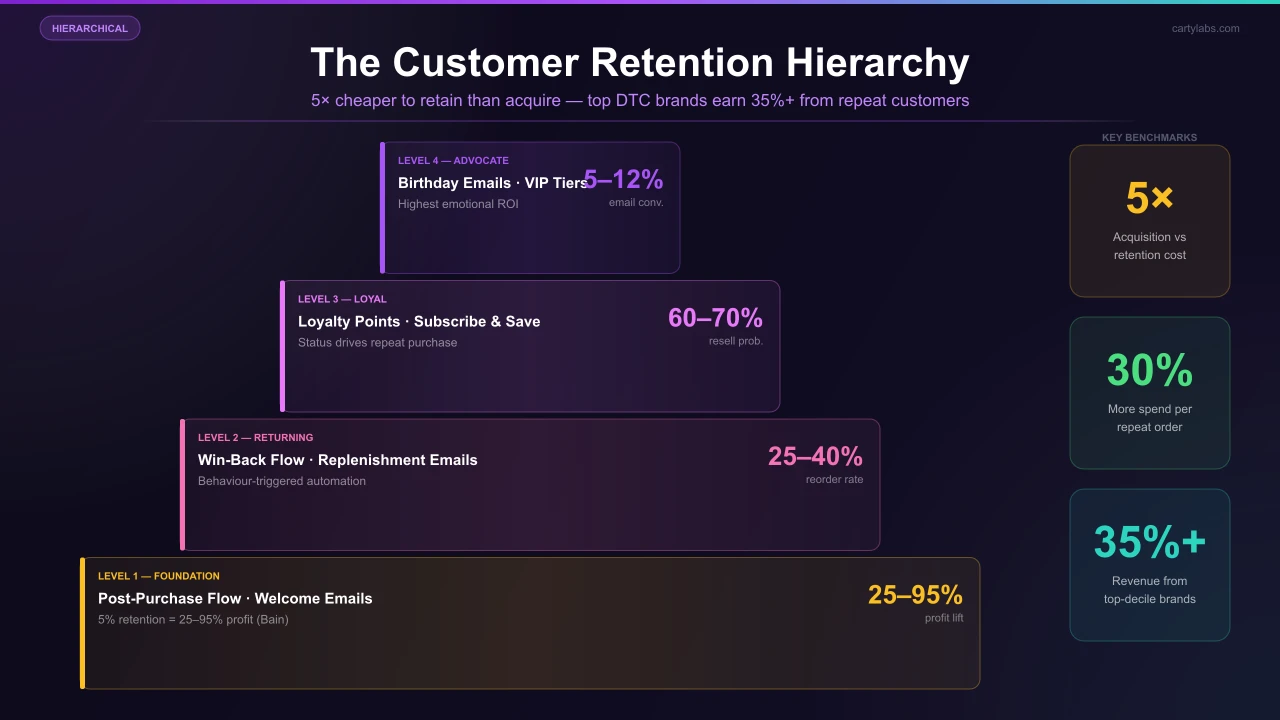
A widely-cited statistic: it costs 5x more to acquire a new customer than to retain an existing one. Whether the exact multiplier is 3x or 7x, the direction is right. Most Shopify stores under-invest in retention because acquisition feels more measurable.
This guide covers 9 Shopify customer retention tactics that consistently drive repeat purchases without leaning on discounts. Each one is grounded in a specific behavior: rewarding loyalty, lowering friction to reorder, building emotional brand connection, or surfacing replenishment moments at the right time.
Why retention beats acquisition
A few quick numbers:
- Repeat customers spend ~30% more per order than first-time buyers
- The probability of selling to an existing customer is ~60-70% vs. ~5-20% for a new one
- A 5% increase in retention can lift profit 25-95% (Bain & Company)
- Top-decile DTC brands have 35%+ of revenue from repeat customers; bottom decile have under 15%
If you’re growing fast on paid acquisition, your blended LTV is probably hiding a weak retention curve. Fix the curve and your unit economics improve overnight.
The 9 tactics
1. Build a real post-purchase experience
The 7 days after a customer’s first order are the highest-trust window of their relationship with you. Most stores blow it with a generic order confirmation and silence after that. (See our email marketing flows guide for the full sequence.)
A real post-purchase sequence:
- Order confirmation: transactional, clean, sets shipping expectations
- Day 2: “Here’s how to get the most out of [product]” with usage tips and care instructions
- Day 5: Founder note or behind-the-scenes content (build emotional connection)
- Day after delivery: “How’s it going?” to pre-empt support and ask for feedback
- Day 10: Review request (with a small incentive)
- Day 20: Cross-sell with “since you loved X…” framing
Stores that run this consistently see 25-40% of first-time buyers reorder within 60 days. Without it, the number is typically 8-15%.
2. Run a points-based loyalty program
Customers earn points per dollar spent, redeemable for discounts or free products. Standard mechanics:
- 1 point per $1 spent
- 100 points = $5 reward (so a 5% effective return)
- Bonus points for reviews, social shares, birthdays
Apps like Smile, LoyaltyLion, and Yotpo Loyalty handle the mechanics. The lift comes from the psychology of unspent points. Customers who have 80 points feel they’re “leaving money on the table” if they don’t reach 100.
3. Build VIP tiers
Pure points programs treat all customers the same. VIP tiers add aspirational status:
- Bronze: $0-$300 LTV, standard points
- Silver: $300-$1k LTV, 1.5x points plus early access
- Gold: $1k+ LTV, 2x points plus free shipping always plus birthday gift plus dedicated support
Tiers work because they create a goal (the next tier) and recognize loyalty publicly (the badge shows in their account).
4. Subscribe & Save for consumables
For consumable categories like coffee, supplements, skincare, pet food, and household goods, converting one-time buyers into subscribers is the single highest-LTV move available.
We covered the cart-level Subscribe & Save mechanic in a separate post. The summary: surface the toggle in the cart (not just the PDP), offer 10-15% off, frame as “never run out,” and make canceling effortless.
Subscribers typically have 3-5x the LTV of one-time buyers in the same category.
5. Replenishment reminders
For consumables that don’t end up on a subscription, replenishment emails fill the gap. Trigger an email at ~80% of the typical consumption window:
- Coffee (30g/day, 250g bag): email at day 24
- Skincare (8 weeks per jar): email at day 50
- Supplements (60-day bottle): email at day 48
- Pet food (40lb bag for medium dog, ~5 weeks): email at day 28
The email shows the SKU they bought with a one-click reorder button. Conversion: 15-25%.
6. Birthday and “anniversary” emails
A free gift on their birthday. A “thanks for being with us 1 year” email on their first-order anniversary.
These cost almost nothing and produce 25-40% click-through and 5-12% conversion, far above any other email campaign type. The effect is largely emotional: the customer feels seen.
7. Make reorder one click from the customer account
The Shopify account page should let customers reorder a previous order with one click. Most themes don’t surface this clearly. A quick theme tweak adds a “Reorder” button to the order history, and reorder rate jumps 2-4x.
8. Build a real community surface
For brands with passionate customers in skincare, fitness, pet, food, or hobby categories, a community surface like a Facebook group, Discord, or private newsletter builds retention you can’t fake.
Members feel ownership, share UGC, refer friends, and forgive product hiccups. The metrics that matter: % of customers in the community, % of community members who reorder annually.
This isn’t free. It requires a community manager. But for the right brand category it’s the highest-LTV investment available.
9. Surprise & delight
Free gifts in random orders. Hand-written thank-you notes on the 100th customer’s order. A small upgrade (“we noticed you ordered the small, so we sent the large at no charge”).
These are non-systematic by design. The goal isn’t a measurable lift on this customer. It’s the screenshot they post on Instagram, which becomes acquisition for the next 50 customers.
What doesn’t work for retention
A few common patterns that look like retention but aren’t:
Discount blasts to the entire list. Conditions customers to wait for discounts and erodes margin. Run them sparingly.
Generic “we miss you” emails with no personalization. They get opened, ignored, and unsubscribed.
Loyalty programs nobody can find. If the points balance isn’t surfaced in the customer account, the cart, and post-purchase emails, customers forget they exist.
SMS spam. SMS is the highest-engagement channel and the easiest to abuse. Three sends a week is too many. One a month is right for most brands.
Measuring retention
The metrics that matter:
| Metric | Healthy range |
|---|---|
| Repeat purchase rate (60-day) | 25-40% (consumables), 15-25% (durables) |
| Repeat customer revenue % | 30-50% of total |
| 12-month LTV / CAC | 3:1+ |
| Average orders per customer (12-month) | 2.0-3.5 |
| Subscriber retention (day 90) | >55% |
If your repeat purchase rate is below 15%, you have a retention problem masked by acquisition spend. Work the list above before pouring more money into ads.
Common retention mistakes
Treating retention as a quarterly initiative. It’s an always-on operating muscle, not a campaign.
Owning all retention to one channel. Email, SMS, on-site loyalty, post-purchase content, and community each do different work. The combined effect is multiplicative.
Ignoring product quality. No retention tactic compensates for a product that disappoints. Reorder rate is the most honest measure of whether your product actually delivers.
Failing to measure cohort LTV. Customers acquired in different months have different retention curves. Cohort analysis reveals which acquisition channels are bringing in retainable customers vs. cheap conversions that never repeat.
A short summary
Shopify customer retention is a portfolio of small, consistent tactics: a real post-purchase sequence, a loyalty program, VIP tiers, Subscribe & Save where it fits, replenishment reminders, birthday emails, frictionless reorder, community, and the occasional surprise.
None of them is a silver bullet. Together they typically lift LTV 30-80% within a year of consistent execution.
Want a rewards bar that drives repeat purchases from the cart? Install Cartylabs free on Shopify. The Growth plan includes stacked rewards, Subscribe & Save integration, and post-purchase upsells.
Learn more: How to increase AOV on Shopify, Shopify upsell app
Next steps
Related Shopify resources
Practical tools and product pages related to this guide.
Keep reading
All articles →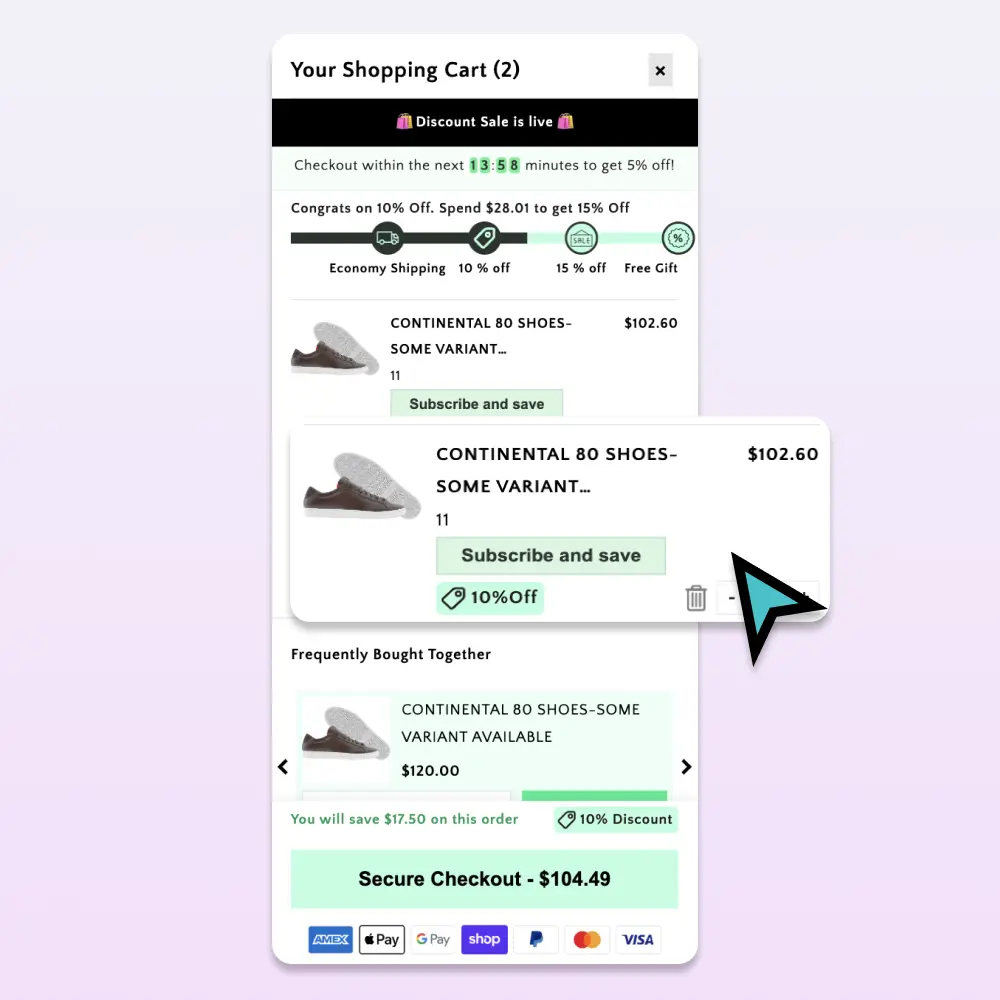
Subscribe & Save on Shopify: Cart Conversion Guide for Revenue
A Shopify Subscribe & Save toggle in the cart converts 12-25% of one-time buyers into subscribers. Where to surface it and how to set it up.
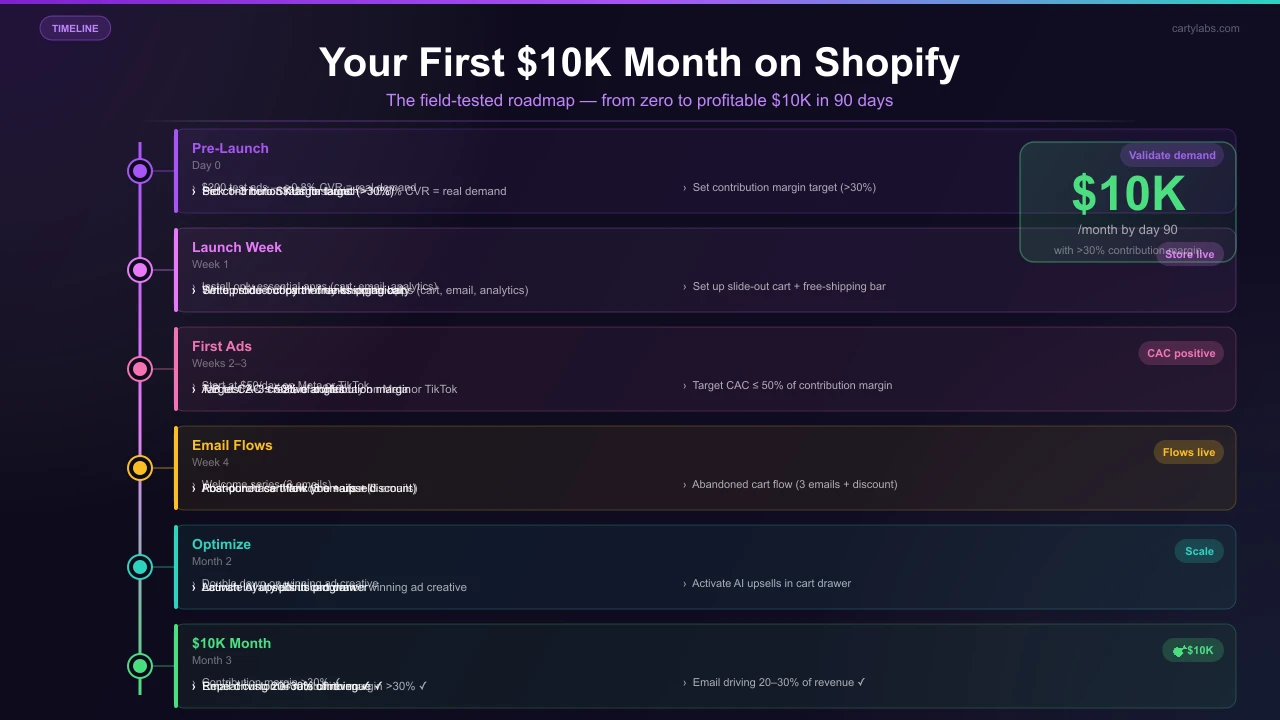
Shopify Store Launch: A Practical Playbook to Your First $10K Month
Launching a Shopify store from zero to $10K/month: product validation, theme setup, ad budget, conversion optimization, and the first 90 days of operations.
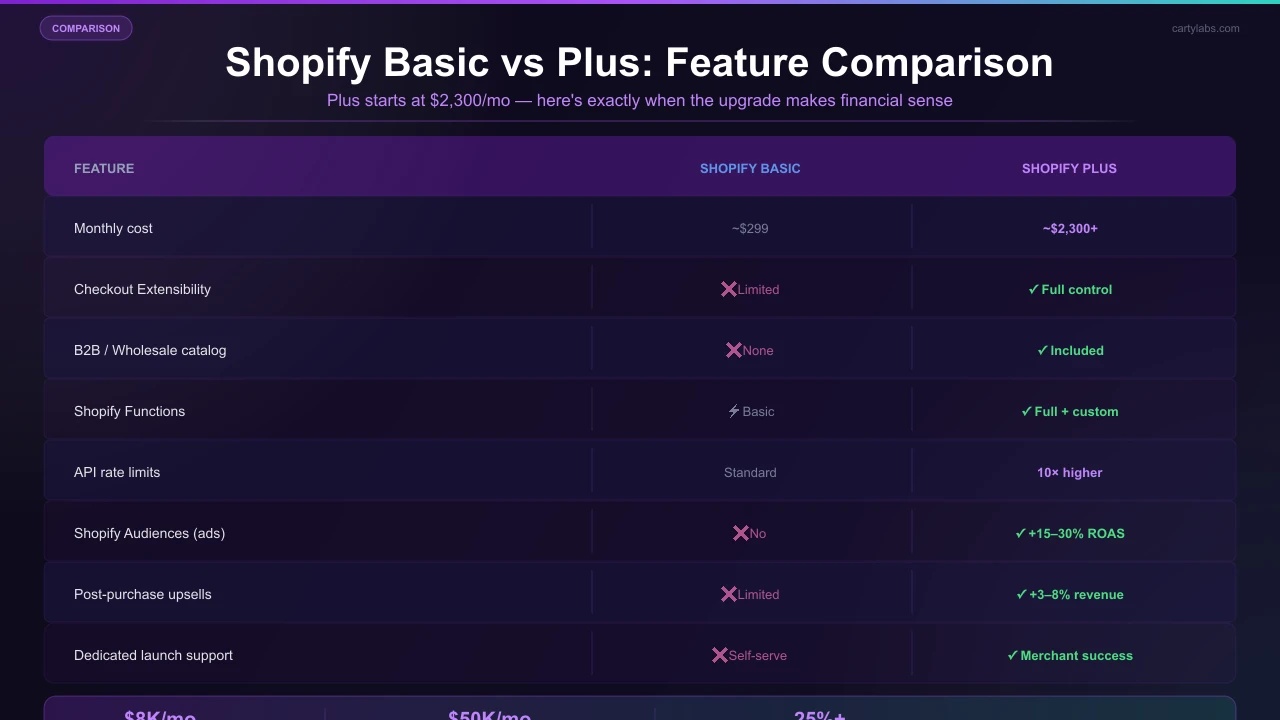
Shopify Plus vs Shopify Basic: When the Upgrade Pays for Itself
The definitive guide to upgrading from Shopify Basic to Plus. The math, features, and breaking point where the $2k/mo fee saves you money.
 Install Cart — Free