
Guest Checkout vs. Account Creation on Shopify: Which Wins in 2026?
Should you force account creation or offer guest checkout on Shopify? Data-backed comparison of conversion, retention, LTV, and the hybrid post-purchase signup pattern that beats both.
In this article
- 01 What the data says#
- 02 The retention argument (and why it usually fails)#
- 03 The narrow categories where forced signup wins#
- 04 The hybrid pattern that wins#
- 05 What about Shop Pay?#
- 06 Configuring guest checkout on Shopify#
- 07 Designing the Thank You page signup ask#
- 08 Migrating from forced signup to guest#
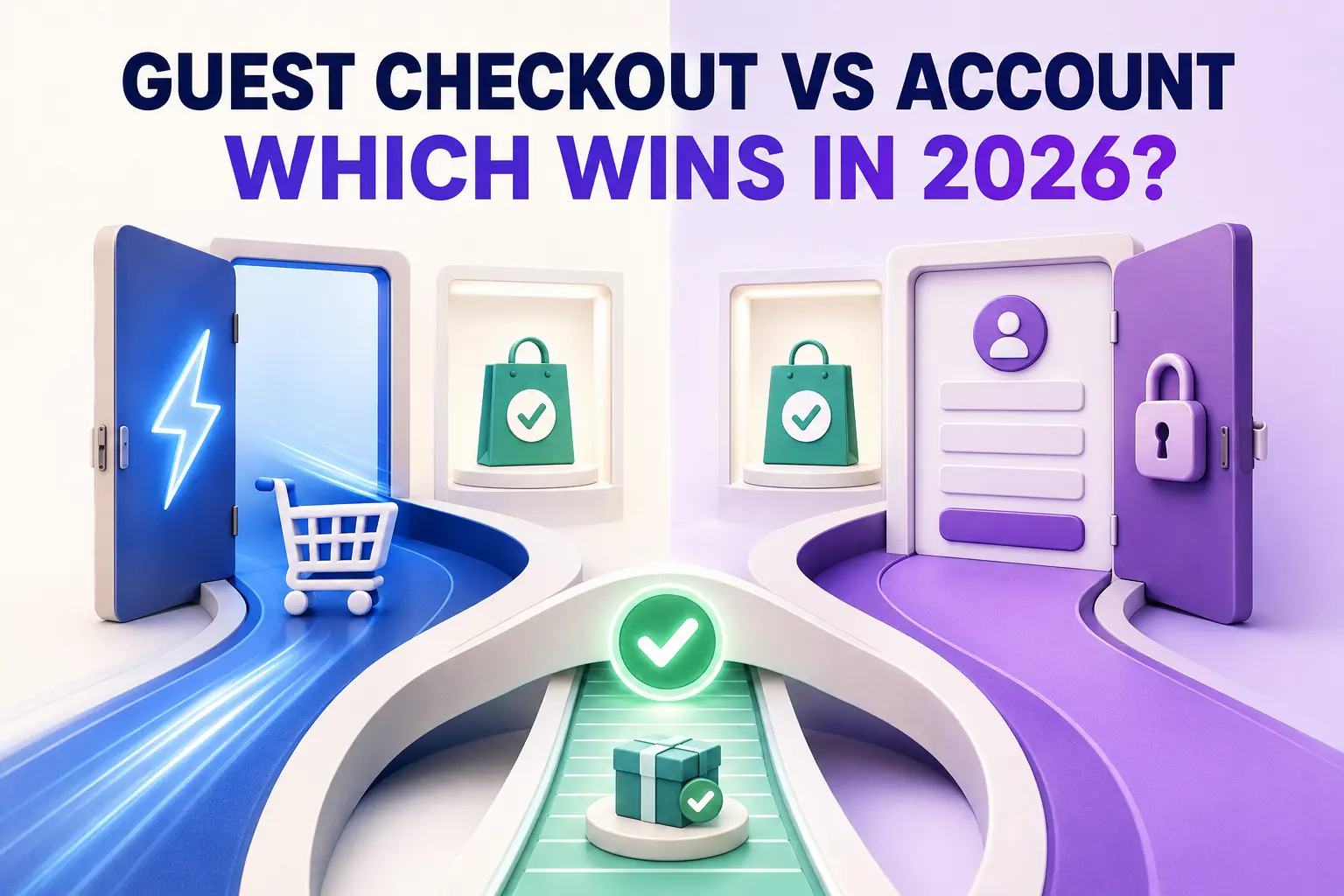
The guest-checkout-versus-forced-signup debate has been running for fifteen years and most Shopify merchants still get it wrong. The data is unambiguous: forced account creation at checkout costs more conversion than it produces in long-term retention value, except in narrow categories. The pattern that wins in 2026 is neither pure guest nor forced signup. It is guest checkout at purchase plus an aggressive post-purchase account-creation prompt.
This post walks through the conversion math, the retention math, the categories where forced signup actually wins, and the hybrid pattern that beats both.
For the deeper checkout UX context, see the Shopify checkout UX best practices post. For the funnel framing, the Shopify checkout optimization guide puts this decision in the bigger picture.
What the data says
Across the dozens of Shopify stores we have audited, the average conversion impact of removing forced account creation from checkout is a four to nine percent absolute lift in completion. On larger stores, that maps to seven-figure annual revenue. The cost is essentially zero, since the buyer’s data still ends up in your CRM whether they “create an account” or not (Shopify already stores email, address, and order history on every customer).
Forced signup loses for a simple reason: it adds a step that the buyer cannot see the value of at the moment of purchase. The buyer wants a product, not a relationship.
The retention argument (and why it usually fails)
The case for forced signup is that registered customers have higher repeat purchase rates than guest customers. This is true in raw numbers. It is not, however, causal.
The buyers who would have created an account anyway repeat at higher rates. Forcing the rest into account creation does not turn them into repeat buyers; it loses them at checkout and produces zero additional repeats. The correct comparison is guest-checkout repeat rate (high if you have a working post-purchase flow) versus forced-signup completion rate (lower than guest).
In nearly every Shopify category, guest checkout plus post-purchase signup outperforms forced signup on both metrics.
The narrow categories where forced signup wins
There are a few where forced signup is correct:
- B2B and wholesale (the account is the business relationship)
- Subscription-first stores (the account is the subscription)
- High-AOV concierge or made-to-order (the account is the fulfillment record)
- Stores where the account unlocks core functionality (loyalty redemption, gift card balance)
If your store does not fit one of these categories, the default should be guest checkout with strong post-purchase conversion to account.
The hybrid pattern that wins
The format that consistently beats both pure guest and forced signup:
- Checkout: no account required, no checkbox, no friction
- Thank You page: “Save your order history. Create a password to track shipping, manage returns, and earn loyalty points.” One field, one click.
- First post-purchase email: “Set your password” link
- Account-prompt nudge in the customer-account portal on next visit
This pattern converts thirty to fifty percent of guest checkouts into accounts within seven days, with zero conversion impact at the time of purchase. Net effect: more orders, more accounts, more long-term value.
The Shopify Thank You page is the right place for the primary signup ask. Our Shopify checkout post-purchase upsell guide covers what else lives there.
What about Shop Pay?
Shop Pay sidesteps the entire debate for shoppers who use it. The buyer is effectively signed into a Shopify-wide account already, so signup happens automatically. Most stores can convert thirty to sixty percent of mobile checkouts to Shop Pay if they place the button correctly. See our Shopify quick buy and fast checkout guide.
For the buyers who do not use Shop Pay, the hybrid pattern above is the default.
Configuring guest checkout on Shopify
In Settings > Checkout and accounts, set account requirement to “Accounts are optional.” This is the right setting for most stores. Make sure the “Show a sign-in link in the header” toggle is on so returning customers can sign in voluntarily.
Avoid setting it to “Accounts are required” unless you fit one of the narrow categories above. The default new-Shopify-store setting (optional) is almost always correct.
Designing the Thank You page signup ask
The signup ask on the Thank You page should be:
- Above the fold, but below the order confirmation
- Framed as a benefit (save order history, track shipping, earn points)
- One field (password) plus one button
- Bypassable (the buyer can leave without creating an account)
- Not prefilled with an opted-in checkbox (this is a dark pattern and damages trust)
A well-designed Thank You page signup converts substantially better than a checkout-step signup because the buyer has already paid and is in a positive emotional state.
Migrating from forced signup to guest
If you currently force signup, the right migration is staged:
- Switch to optional account creation
- Add a Thank You page signup prompt
- Wait fourteen days, measure conversion lift and signup rate
- Adjust the Thank You page prompt to maximize signup rate
Almost every store sees both metrics move in the right direction. The few that do not are usually in the narrow categories listed above.
For a Thank You page signup module that ships pre-built with a tested layout and post-purchase upsell flow, Cartylabs covers the hybrid pattern end-to-end so you get the conversion lift of guest checkout and the signup rate of forced creation.
Next steps
Related Shopify resources
Practical tools and product pages related to this guide.
Keep reading
All articles →
Shopify One-Page Checkout: The Ultimate Conversion Booster?
Does Shopify one-page checkout actually beat multi-step in 2026? A data-backed look at conversion gains, mobile trade-offs, and exactly when to switch your store.
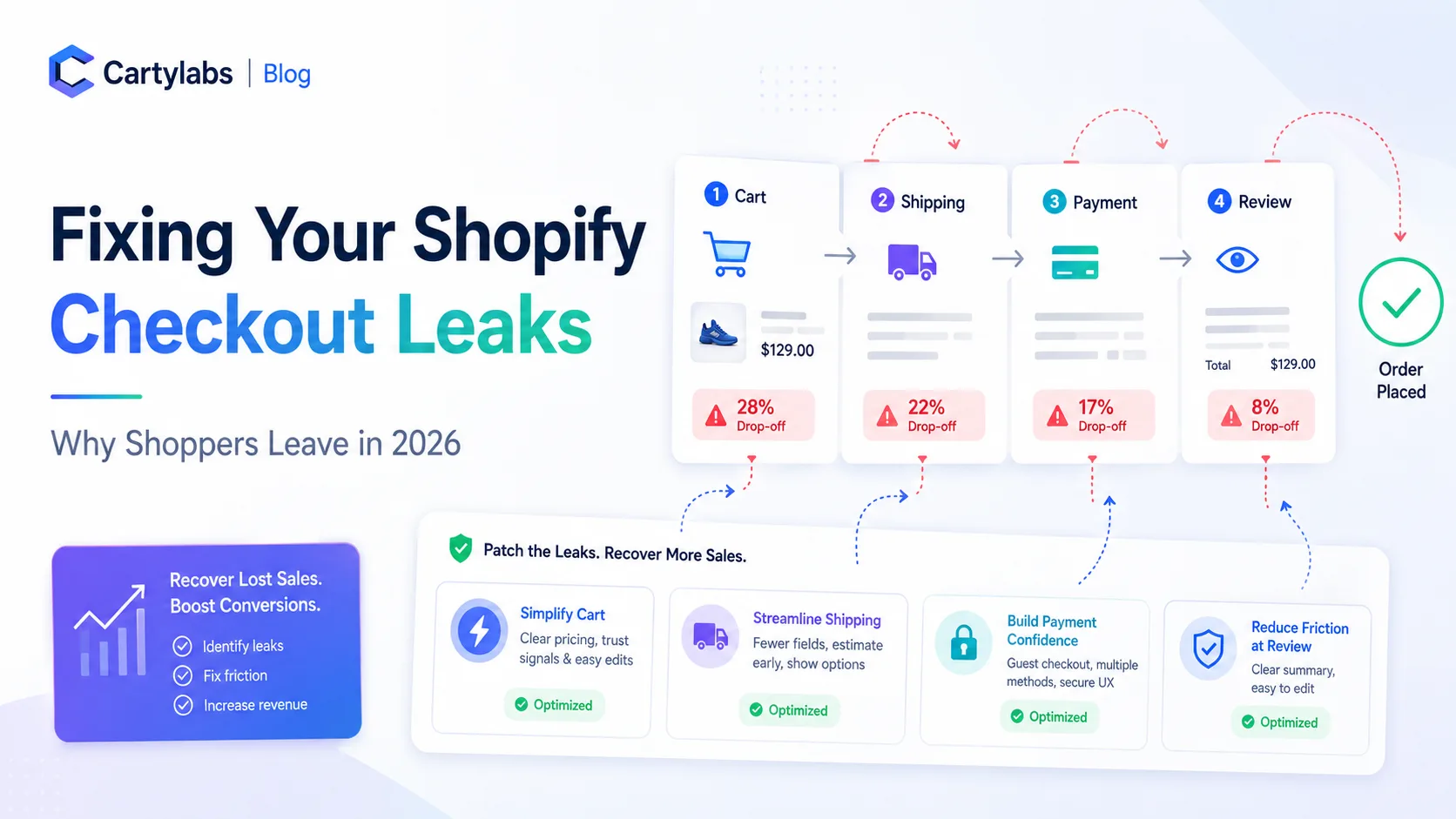
Why Shoppers Leave: Fixing Your Shopify Checkout Leaks in 2026
Diagnose Shopify checkout drop-off step by step using a leak-detection framework that maps abandonment causes to specific UX fixes for cart, shipping, payment, and review screens.
The Frictionless Shopify Checkout: 12 Secrets to Higher Sales
Build a frictionless Shopify checkout with twelve advanced tactics across form design, payment surfacing, dynamic shipping, and intelligent default selection that quietly compound conversion.
 Install Cart — Free